





Museo de la Autonomía Universitaria Ventana 2
Museo de la Autonomía Universitaria Ventana 2
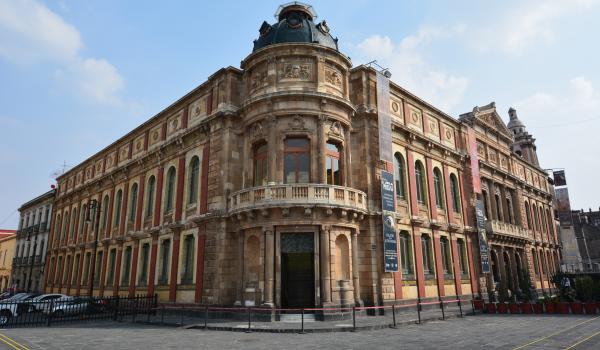
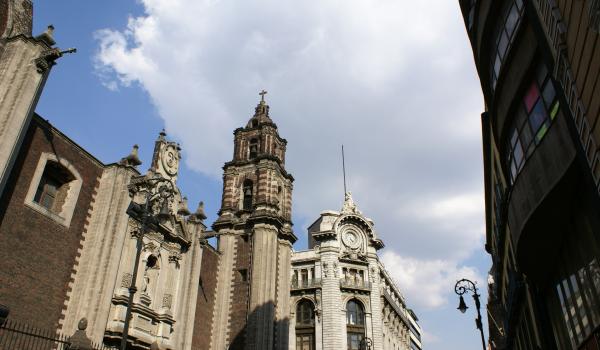
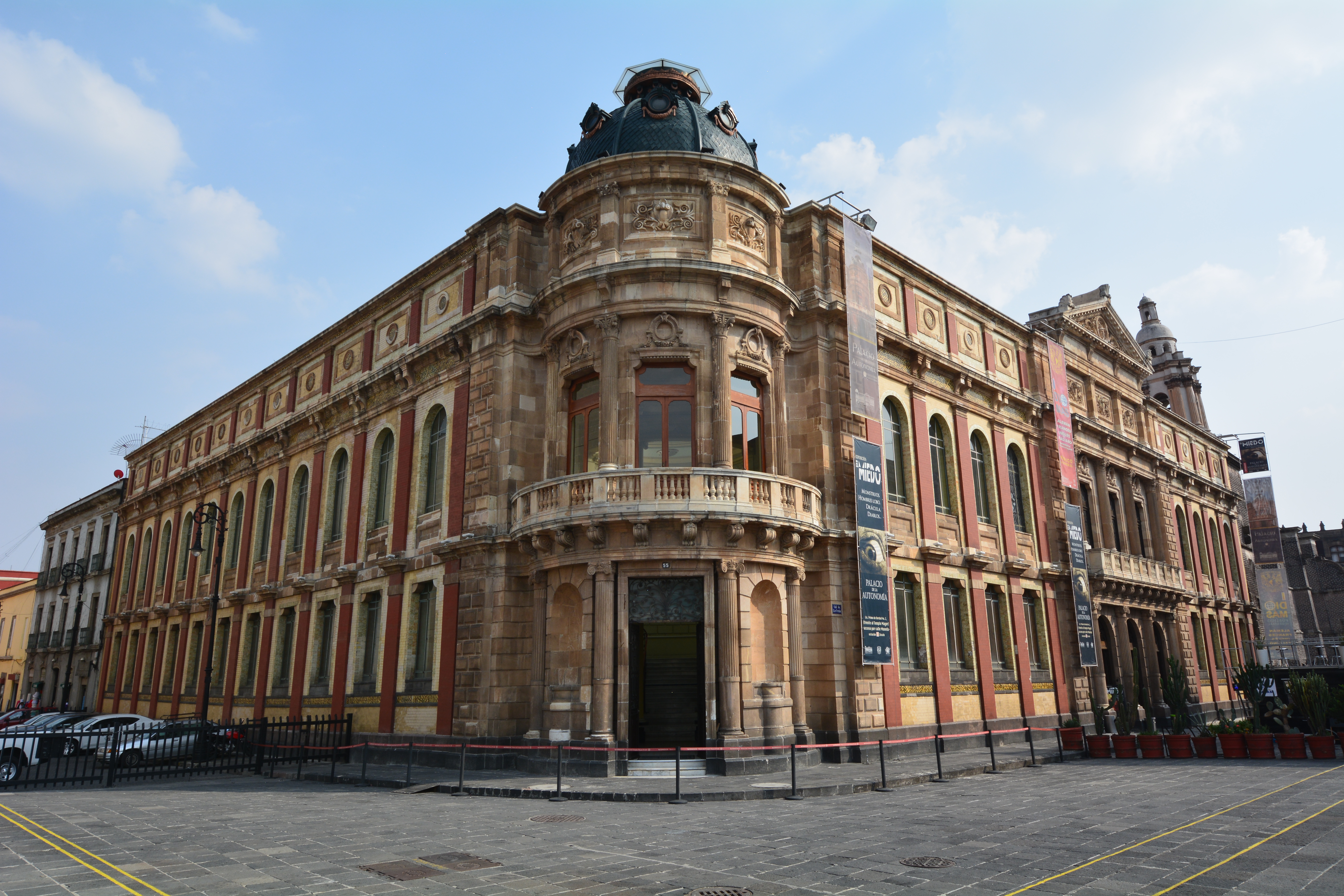
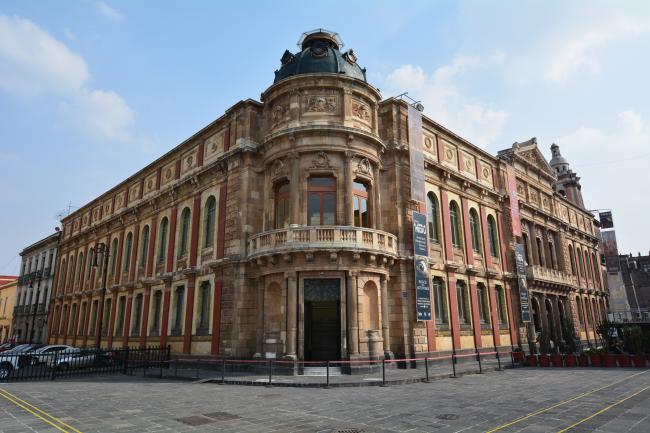
The Old Dentistry Palace of the UNAM houses the remains of six rooms from the convent of Santa Teresa la Antigua, a 17th- and 18th-century building where the Order of Discalced Carmelites of Saint Joseph resided.
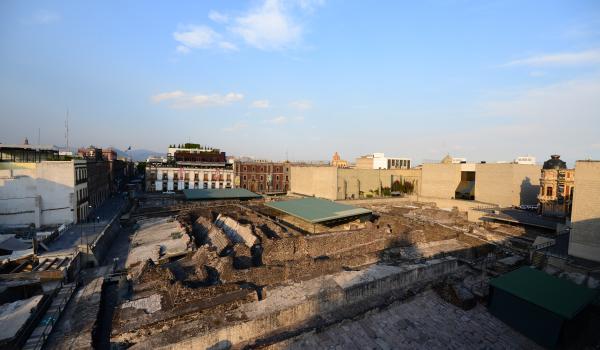
During pre-Hispanic times, part of what is now the Museum of University Autonomy was part of the sacred space of Tenochtitlan. In the early colonial period, it belonged to Juan Luis de Rivera, the first councilman of the Metropolitan Council and treasurer of the Mint of New Spain, and in 1615, it became the former convent of Santa Teresa la Antigua. After the expropriation of the clergy's property, it was purchased by the federal government to establish the Normal School for Primary School Teachers.
After several renovations, the National University was inaugurated in 1910. In 1929, University Autonomy was declared on the first floor of this building. Between 1998 and 2000, it was renovated by the Urban Archaeology Program, which left three archaeological windows.
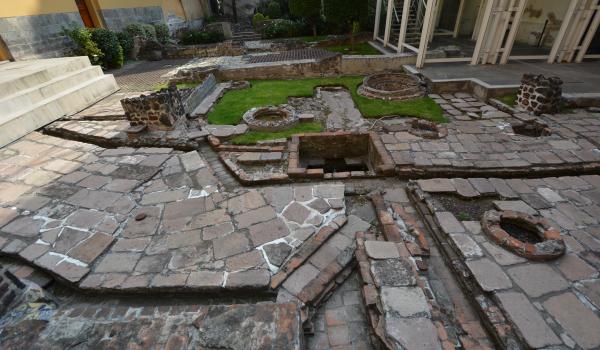
The second and third windows display archaeological remains corresponding to the former Convent of Santa Teresa la Antigua. The first of these is located at the back and center of the University Autonomy Palace. It is a large space measuring 12 m by 13 m that, during the occupation of the “Dr. Erasmo Castellanos Quinto” preparatory school, functioned as a gymnasium. Currently, through a floor sealed with tempered glass, you can see the remains of six architectural spaces, including a water storage tank, also known as a “pleasure bath” used by the nuns.
The oval-shaped pool, oriented east to west, is approximately 7.80 m long by 3.30 m wide and 60 cm deep. The walls that surround it are shaped like an inverted slope and are made of rough-hewn stone and fragments of red brick, joined with lime and sand mortar. The top of these walls would have served as a seat for those who used the pool.
The bottom of the pool has a floor of andesite blocks, surrounded on all four sides by a border of tiles subdivided into geometric squares of the San Luis polychrome and Puebla blue and white types, with a predominance of decorative phytomorphic designs in yellow and white, blue and white, and monochrome yellow. In the center of the pool is a quadrangular element measuring 1.60 m per side, composed of blue and white Puebla tiles with designs that include a wide variety of animals: birds, rabbits, deer, and dogs, as well as anthropomorphic figures seen in profile, with a marked oriental influence.
To the north of the pool are the remains of the kitchen, which also served as the dining room of the former Convent of Santa Teresa la Antigua. In this large space, measuring 7.95 m long by 7.60 m wide, there is another rectangular pool for water storage, which was decorated on the outside with two-color Talavera tiles, blue on white, with flower designs, and on the inside it is decorated with tiles. Next to this basin is a small crescent-shaped bench, decorated with tiles, which must have been the base for a metate.
The other spaces visible in this window correspond to rooms, some for storing products and another, apparently, a bathroom in the convent.
Source: Raúl Barrera Rodríguez, director of the Urban Archaeology Program